
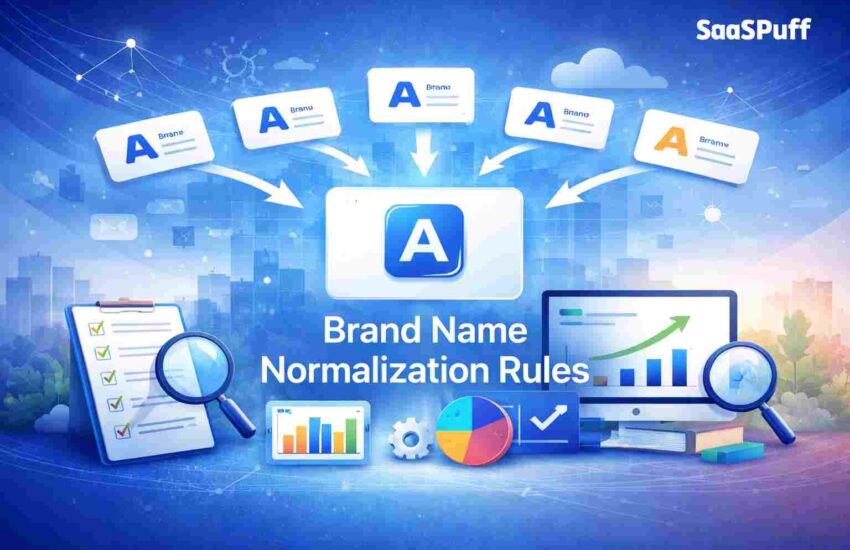
Managing brand data is not as simple as it seems. Many companies face issues when brand names appear in multiple formats. This can happen in databases, websites, or even across marketing platforms. The result is confusion, poor SEO, and a lack of consistency in analytics. Brand name normalization rules are a set of techniques designed to standardize brand names so that they are consistent everywhere. These rules help businesses, search engines, and users recognize the same brand, no matter the variation. This article will explain everything you need to know about brand name normalization rules, the mistakes to avoid, and how to implement them effectively.
Many businesses struggle with inconsistent brand names in their databases and SEO systems. When the same brand appears in many forms, it causes confusion for analytics and search engines. Brand name normalization rules help correct this. These rules standardize brand names, improve data accuracy, and boost search engine optimization. In earlier sections, we explained what these rules are and why they matter. Now, we will focus on practical steps and advanced insights. You will learn how to normalize brand names correctly, best practices for clean data, tools that help, and the SEO benefits you can gain. This will help you manage brand data with precision and confidence.
What Are Brand Name Normalization Rules?
Brand name normalization rules are guidelines that make different variations of a brand’s name consistent. Brands often appear differently across platforms. For example, “Nike,” “NIKE,” “Nike Inc.,” and “Nike, Inc” may refer to the same company, but systems might treat them as separate entries. This inconsistency can lead to data errors, duplicate records, and analytical confusion. Normalization ensures that all these variations are recognized as one standard brand name.
The process usually starts with defining a canonical brand name, which becomes the official reference in databases, marketing reports, and analytics. Once defined, normalization rules remove unnecessary punctuation, standardize capitalization, remove legal suffixes like “Inc” or “Ltd,” and fix spacing issues. In some cases, abbreviations like “P&G” are expanded to “Procter and Gamble” for clarity.
Modern organizations also apply brand name normalization rules in automated systems. Enterprise CRMs, marketing platforms, and e-commerce catalogs use algorithms to apply these rules. This reduces duplicate entries and improves data quality across the company. A key benefit is that these rules allow seamless integration of data from multiple sources. For example, if two teams enter “H&M” differently, normalization ensures they are counted as the same brand.
Another aspect is consistency for reporting and analytics. Normalized brand names help marketers track brand mentions, measure engagement, and evaluate campaign performance. Companies can also measure customer sentiment accurately. By standardizing brand names, they avoid the risk of splitting data into separate fragments, which might mislead decision-making.
Table: Example of Brand Name Normalization
| Original Name Variations | Normalized Name |
| Nike, Inc. | Nike |
| NIKE | Nike |
| Apple Inc | Apple |
| APPLE | Apple |
| P&G | Procter and Gamble |
| H&M | H&M |
As seen in the table, the goal is to convert multiple variations into one consistent and readable form. Organizations that apply brand name normalization rules consistently notice fewer errors and improved SEO performance, because search engines understand that all variations refer to the same entity.
Overall, brand name normalization rules are essential for data accuracy, system integration, and better analytics. Companies ignoring these rules risk misreporting data and losing valuable insights. Beyond internal systems, these rules also influence digital marketing efforts, ensuring search engines treat brand variations correctly and consistently.
Why Inconsistent Brand Names Hurt SEO
Inconsistent brand names are not just a data problem; they can also damage your SEO. Search engines, like Google, treat each variation of a brand as a separate entity if normalization is not applied. This splits authority, reduces ranking potential, and creates confusion. For example, if your website mentions “NIKE” on one page and “Nike Inc.” on another, Google may not fully recognize these as the same brand. This diminishes your brand signals and hurts your online visibility.
When websites or blogs use multiple variations of a brand name, it also creates a problem for backlink authority. Links pointing to different versions of the same brand dilute value. A backlink to “NIKE” is treated separately from “Nike,” reducing the overall SEO impact. Over time, these inconsistencies can lower page rankings, affect keyword relevance, and even reduce organic traffic.
Moreover, duplicate content issues often arise when brand names are inconsistent. Content crawlers may index multiple versions of the same brand as separate entries, splitting impressions and affecting click-through rates. Even structured data like Schema markup depends on consistent naming. Without normalization, search engines may struggle to display the correct brand in rich snippets or knowledge graphs.
Companies that apply brand name normalization rules notice improvements in search engine visibility. Standardized names ensure that all brand mentions consolidate authority signals. Additionally, internal linking becomes more effective because anchor texts consistently refer to the same brand. This reduces confusion for both users and algorithms.
SEO is also influenced by entity recognition. Google’s AI identifies brands as entities to understand relationships between products, content, and services. If a brand appears in multiple variations, AI may misclassify or partially ignore mentions. This results in lost opportunities to rank for branded searches.
To summarize, inconsistent brand names hurt SEO by diluting authority, causing duplicate content issues, and confusing search engines’ entity recognition systems. Applying brand name normalization rules is therefore critical for maintaining strong search engine performance, consistent brand authority, and accurate analytics reporting.
How Google Treats Brand Variations
Google treats brands as entities in its search algorithms. When variations of a brand appear, Google attempts to match them with the most authoritative version. However, inconsistencies make this process harder. If “Apple Inc.” and “APPLE” appear on different pages, Google may not associate all mentions with the same entity. This affects search visibility, knowledge panels, and branded search results.
Entity recognition is crucial for Google to determine relationships between brands, products, and keywords. Brands that are not normalized can experience fragmentation in search results. For instance, brand reputation metrics, reviews, and citations may not consolidate properly, leading to weaker SERP presence. In contrast, normalized brand names help Google understand that multiple variations point to the same entity.
Brand name normalization rules also affect structured data implementation. Schema markup, knowledge graphs, and rich snippets rely on standardized brand names. Without proper normalization, Google may display incomplete or inaccurate brand information. This can impact click-through rates, impressions, and user trust.
Moreover, backlinks with inconsistent anchor texts confuse Google’s algorithms. Links pointing to different brand variations are treated separately, weakening domain authority signals. By standardizing brand names, businesses can ensure that every mention, link, or citation contributes to a unified brand entity.
Google also uses AI and NLP (Natural Language Processing) to detect brands contextually. Unnormalized brand names reduce the effectiveness of these algorithms. Entities may not appear in recommended searches, related searches, or knowledge panels. By implementing brand name normalization rules, businesses ensure that AI systems consistently recognize their brand across all platforms.
Overall, understanding how Google treats brand variations highlights the importance of consistent naming. Normalized brand names improve entity recognition, consolidate SEO authority, and enhance overall online visibility.
Common Brand Name Data Issues
Businesses often face multiple data issues when brand names are inconsistent. One common problem is duplicate records in databases. Different spellings, capitalization, or punctuation can create multiple entries for the same brand. This makes reporting inaccurate and leads to misleading analytics. Another issue is errors in automated systems. CRM platforms, e-commerce catalogs, and marketing tools rely on clean data. Inconsistent brand names can trigger misclassification, wrong product mapping, or misaligned campaigns.
Legal suffixes and abbreviations also cause problems. Names like “LLC,” “Ltd,” or “Inc” can be inconsistently applied, resulting in multiple versions of the same brand. Abbreviations such as “P&G” versus “Procter and Gamble” can split mentions, reviews, and backlinks. This impacts analytics and SEO performance.
A lack of standardization affects cross-platform consistency. Marketing teams may create social media posts, website content, or email campaigns using different brand variations. Customers searching online may find fragmented information. For global companies, multilingual platforms further complicate brand consistency.
Another common issue is case sensitivity. “NIKE” versus “Nike” might seem minor, but systems often treat them differently. This affects data aggregation, reporting, and even automated recommendations.
Finally, unnormalized brand names interfere with entity resolution. AI and NLP systems may fail to recognize all variations as the same entity. This leads to inaccurate insights, poor data-driven decisions, and weakened brand authority.
Proper brand name normalization rules solve these problems by creating a single, standardized reference for all brand mentions. This ensures accurate reporting, effective SEO, and unified brand perception across all digital platforms.

Good vs Bad Normalization Examples
Correct implementation of brand name normalization rules can significantly improve brand consistency. For example, consider “Apple Inc.” and “APPLE.” Good normalization converts both to “Apple,” removing unnecessary suffixes and standardizing capitalization. Similarly, “P&G” is converted to “Procter and Gamble” to avoid confusion. Proper normalization ensures all mentions are counted accurately in analytics, backlinks, and SEO signals.
Bad normalization can be as harmful as no normalization. Over-normalization, such as converting “H&M” to “H and M,” destroys brand identity. Removing essential punctuation or changing widely recognized abbreviations can confuse users and search engines. Inconsistent normalization across platforms creates data fragmentation, misleading analytics, and reduced SEO performance.
Table: Good vs Bad Normalization Examples
| Original Name | Good Normalization | Bad Normalization |
| NIKE | Nike | NIKE INC |
| Apple Inc | Apple | APPLE INC |
| P&G | Procter and Gamble | PG |
| H&M | H&M | H and M |
| Microsoft Corp. | Microsoft | MICROSOFT CORPORATION |
These examples highlight why companies must apply brand name normalization rules consistently. Good normalization consolidates SEO authority, improves analytics, and ensures brand recognition. Bad normalization creates confusion, splits authority, and weakens search rankings.
Organizations that implement normalization correctly often see measurable improvements in data quality, search engine ranking, and reporting accuracy. Proper examples act as benchmarks for future data processing and standardization initiatives.
Many businesses struggle with inconsistent brand names in their databases and SEO systems. When the same brand appears in many forms, it causes confusion for analytics and search engines. Brand name normalization rules help correct this. These rules standardize brand names, improve data accuracy, and boost search engine optimization. In earlier sections, we explained what these rules are and why they matter. Now, we will focus on practical steps and advanced insights. You will learn how to normalize brand names correctly, best practices for clean data, tools that help, and the SEO benefits you can gain. This will help you manage brand data with precision and confidence.
Steps to Normalize Brand Names Correctly
To normalize brand names correctly, it is essential to follow a clear process. The first step is to define the canonical form of every brand. Canonical form means the official version that all data systems will use. For instance, decide that “Apple” will always be “Apple”, not “Apple Inc” or “APPLE”. Once you define the standard, document it in your data governance policy. This policy becomes the reference for everyone in your organization. It helps maintain consistency across all platforms.
Next, gather all existing brand names in your system. This involves exporting data from your CRM, marketing systems, e-commerce catalogs, and content platforms. When compiled, you will find many variations of the same brand. Group these variations together and map them to their canonical form. For example, “NIKE”, “Nike Inc.” and “nike” all get mapped to “Nike”. This step requires careful review and validation to avoid mistakes.
After mapping, create rules to automate the transformation. These rules will standardize capitalization, remove or replace punctuation, and fix spacing errors. Some systems also use lookup tables to match abbreviations with full names, such as changing “P&G” to “Procter and Gamble”. Automation ensures that new data follows the same standard without manual intervention.
Validation is also crucial. After applying rules, check a sample of data to confirm the accuracy of normalization. You might use sample testing or double verification to ensure consistency. Errors found at this stage can save major issues later in analytics and SEO performance. Continual monitoring is also important. Brand data changes over time, and systems must adjust to new variations like rebranding or mergers.
Training your team is another step. Make sure everyone understands why brand name normalization rules are applied and how to follow them. A well-trained team helps maintain long-term consistency. Over time, your normalized data will improve reporting accuracy, analytics quality, and branded search results. Remember, consistent brand names help both internal systems and search engines identify and index your brand correctly.
Best Practices for Consistent Brand Data
Consistency in brand data does not happen by accident. It requires a set of best practices that ensure every system treats the brand the same way. The first best practice is to define guidelines clearly. Every brand in your database must have a documented canonical form. This becomes the central rulebook for your entire organization. Use this rulebook in every platform, whether CRM, website CMS, or e-commerce catalog.
Another important practice is to standardize naming conventions. This involves creating rules for capitalization, handling punctuation, and removing unnecessary suffixes like “Inc” or “Ltd”. These conventions should be applied systematically. Even a small difference like “NIKE” vs “Nike” can lead to inconsistent analytics. Standardization ensures that all variations become one recognized form.
Communication is also critical. Teams across marketing, sales, and data management must use the same brand naming standards. Regular workshops and training sessions can help align different teams. When everyone uses the same rules, brand data stays consistent and reliable.
Data governance is key. Create a governance committee or assign a data steward. This person or team reviews brand name changes, updates the normalization rules, and resolves conflicts. They also monitor data quality and enforce rules across systems. A strong governance structure reduces errors and improves data integrity.
It is also good practice to schedule regular audits. Check your brand data periodically to find new variations that may have entered the system. Audits help identify gaps and ensure that normalization rules are updated. This ensures your brand data remains clean and reliable over time.
Finally, use technology to support these best practices. Tools that automate normalization, track changes, and validate brand names make these practices easier. But technology alone is not enough. The best results come from combining tools with clear rules, team training, and ongoing governance.
Consistent brand data leads to better analytics, improved decision-making, and stronger SEO rankings. When every system uses the same brand names, you remove confusion and make your data trustworthy. The best practices above ensure your data remains clean, consistent, and useful.
See Also: Design and Engineering Practice for Modern Innovation Systems
Tools for Brand Name Normalization
Many tools help with brand name normalization, each designed to make data consistent and accurate. Some tools are built into large systems like CRMs and data warehouses. Others are standalone solutions that automate cleaning and standardization. These tools can correct capitalization, remove unwanted variations, and match brand names against a standard list. They save time and reduce human error.
One group of tools is data management platforms. These platforms gather data from multiple sources, clean it, and enforce consistency rules. They help merge duplicate brand names and ensure that analytics always use the correct form. These platforms often come with dashboards that show data quality metrics and report errors. The automation embedded in these tools is especially helpful for large datasets.
Other tools focus on natural language processing (NLP). These tools understand text and context. They identify brand variations even when there are spelling differences or punctuation issues. This is essential when dealing with user-generated data like reviews, comments, or social media mentions. NLP tools can match variations and suggest the correct normalized name.
There are also APIs that integrate with your systems. These APIs automatically apply normalization rules in real time as data enters your database. The APIs refer to a lookup table that contains all standardized brand names. As new data arrives, the API replaces variations with the canonical names. This ensures consistency across all incoming data without manual review.
Even spreadsheet tools can help at a basic level. With smart formulas and lookup tables, teams can normalize brand names in smaller datasets. While this is not ideal for large systems, it still helps mark common variations and align them with standards.
When choosing tools, consider how they handle updates. Brand data changes when companies rebrand or merge. The best tools allow you to update rules and lists easily. They also provide reporting so you can track how often variations occur and how normalization impacts data quality.
The right tools, combined with strong governance and clear rules, make normalization efficient and accurate. They help systems use consistent brand names everywhere. This in turn improves analytics and search engine recognition.

SEO Benefits of Brand Name Normalization
Brand name normalization has a direct impact on search engine optimization and online visibility. When search engines like Google crawl your website or database, they look for consistent patterns. If brands appear in multiple forms, search engines may treat them as separate entities. This weakens your ability to rank for branded searches. Normalization ensures that all mentions point to the same canonical brand name. Google and other engines then consolidate those mentions into one authority signal.
Search engines value consistency. When every variation of a brand resolves to a single form, search engines can index your pages more accurately. This improves rankings because it makes the brand entity clearer. A clear brand entity is more likely to appear in featured snippets, knowledge graphs, and related search results. This enhances visibility and increases organic traffic.
Normalization also prevents duplicate content issues. Duplicate content can confuse search engines and split ranking power between multiple pages. With consistent brand names, duplicate risks decrease. Google sees fewer variations and strengthens your brand authority on specific keywords. This boosts your overall SEO performance.
Another benefit is improved backlink quality. Backlinks pointing to different brand name variations dilute authority. When you normalize, all backlinks redirect to the same canonical form. This amplifies ranking power and improves domain authority. Higher authority leads to better search engine rankings and visibility.
Brand normalization also helps with on-page SEO. When internal links use consistent brand terms, search engines better understand site structure. This leads to improved crawling and indexing. Normalized brand names also improve user experience. Users searching for brand-related content will find consistent results. Better user experience signals lead to higher rankings.
In summary, applying brand name normalization rules strengthens SEO by consolidating brand signals, improving indexing accuracy, preventing duplicate content issues, and enhancing user experience. These benefits help your site rank higher for branded and related keywords.
Conclusion
Implementing brand name normalization rules is essential for businesses that want clean data and strong SEO performance. Normalization improves data accuracy, helps search engines recognize brands correctly, and boosts overall visibility. With structured steps, best practices, and the right tools, you can eliminate data inconsistencies and strengthen your brand presence online. Brand normalization also ensures that analytics, reporting, and marketing systems align with real-world brand identities. By focusing on correct normalization, you help both systems and customers understand your brand accurately and consistently.
FAQs
What are brand name normalization rules?
Brand name normalization rules are guidelines to standardize brand names across all systems. These rules help convert different forms of a brand name into one canonical version. Standardizing names improves data quality and search engine recognition.
Why does inconsistent brand data hurt SEO?
Inconsistent brand data splits search engine signals. Search engines may treat each variation as a separate term. This weakens authority, causes indexing confusion, and reduces ranking power.
What tools help with brand name normalization?
Tools that support normalization include data management systems, NLP-based text processors, APIs, and spreadsheet-based solutions. These tools enforce standards and automate the correction of variations.
How does normalization improve analytics?
Normalization consolidates all variations into one record. This prevents duplicate entries, improves reporting accuracy, and ensures consistent metrics across systems.
Can normalization rules change over time?
Yes, normalization rules should be updated. Brand changes, mergers, and new variations may appear. Regular audits and updates keep the rules current.
