

The world of lab automation is changing fast in 2026. Every week brings new lab automation news today about breakthroughs in robotics, AI systems, biotech tools, and startups building the next wave of efficient laboratories. This transformation is not theory anymore. Major innovations are live, real, and impacting labs globally. In this article, we explore the most exciting parts of this field with deep knowledge and real examples.
Top Lab Automation Startups
The realm of Top Lab Automation news Startups is one of the fastest‑growing technology spaces in science. Startups are no longer small labs in garages. They now receive millions of dollars in funding, work with big pharma, and build instruments that replace manual work with robots. For example, a startup led by AI and robotics experts recently raised $11 million to bring AI‑powered automated lab systems to life, with customers including large biotech firms. This shows that investors believe these ideas will change how research is done.
One of the most talked about new companies in this field is Lila Sciences, which is building automated robot labs guided by AI that can design and execute experiments with little human help. Lila has raised over $550 million and is now scaling facilities that can run experiments 24/7. These labs are called “AI Science Factories” and are part of the industry’s next frontier in drug discovery and material research.
Another startup making headlines is Tactus AI, which combines intelligent humanoid robots with advanced software to connect lab instruments and remove human bottlenecks. These robots move samples between machines, manage workflows, and continuously track everything in real time. This has the potential to speed up entire laboratory workflows and reduce mistakes.
Emerald Cloud Lab is another strong player. It has created a cloud‑based laboratory system where scientists can run experiments remotely by shipping samples and commanding machines through software, which makes wet lab research more accessible and reproducible.
These startups are not concept ideas — they are shaping the future by making labs smarter, faster, and more reliable. Whether it’s AI or robotics, these companies lead the push toward automated scientific discovery.
Robotics in Modern Labs
Robotics in Modern Labs is now a fundamental part of how science is done. Robots handle repetitive tasks like moving samples, preparing plates, and loading instruments. In many labs, they replace what took a human technician hours of work. The demand for these robotic systems is rising as companies aim to improve accuracy, speed, and throughput of lab processes.
Big robotic firms like ABB Robotics are showing new AI‑enabled autonomous robots at major industry events. These machines can connect with instruments from other manufacturers, control workflows, and perform multistep experiments without human intervention. This kind of interoperability is a key development, letting labs scale automation across different tools and brands.
Thermo Fisher Scientific and other major lab equipment companies also build advanced robotic systems. These machines can move microplates, handle liquids precisely, and scan barcodes to track samples, which increases efficiency in real laboratory environments.
In real labs, robots are not just gadgets. They are becoming the backbone of operations in biotech and pharma labs, helping scientists focus more on critical thinking and less on physical manual work. This leads to better outcomes and fewer errors in the most complex experiments.
Lab Automation News Today
The lab automation news today is full of landmark advancements. Recent conferences like the Society for Laboratory Automation and Screening (SLAS) highlighted the newest robotic solutions, smart data systems, and AI integrations in laboratory environments. These events showcase innovations that are actively being adopted by labs around the world.
One of the most exciting trends in today’s news is the integration of AI and automation to accelerate scientific discovery across disciplines. Universities and national labs are combining automation with powerful data systems to transform how research is conducted, showing that lab automation now touches fields from energy research to biomedical studies.
Another important story is about partnerships between lab automation companies and software providers. These deals aim to build systems that work smoothly together and help labs digitize and scale. Such collaboration means labs are not just buying robots — they are getting fully integrated smart systems that manage workflows from start to finish. This is real news shaping labs today.
The automation world is moving fast. Every week brings new tools and partnerships, and staying updated with the latest lab automation news headlines is crucial for scientists, engineers, and laboratory managers.
Next‑Gen Robotic Labs
Next‑Gen Robotic Labs are facilities that go beyond simple automation. These labs are fully digital, connected, and often driven by AI orchestrating experiments, tracking data, and adjusting workflows in real time. This is the future of laboratories — where machines and software work together to speed up research like never before.
One example is the Self‑Driving Lab concept announced at SLAS 2026. This platform integrates automation, analytics, and AI orchestration to allow laboratories to run autonomous experiments for research and quality control without constant human oversight.
These next‑generation labs are not only faster but also safer and more reproducible. By using digital tools alongside robots, labs can reduce human error, track exact conditions, and ensure repeatability. For drug discovery, this means faster pipelines from concept to clinical phases. The integration of automation with cloud tools and AI makes these labs more scalable, efficient, and future ready.
It is clear that the next wave of lab automation news is not just robots alone. It is the combination of robotics, AI, digital workflows, and data intelligence that creates truly autonomous labs capable of 24/7 operation.

Biotech Lab Automation Updates
Recent biotech lab automation updates show that companies are rapidly adopting automation to power research, especially in areas like cell therapy, genomics, and antibody discovery. One major area of progress is in antibody discovery automation, where automated workflows bring precision and speed to processes that traditionally took weeks or months when done manually.
Another breakthrough is in cell therapy manufacturing. A company called Multiply Labs is scaling labs that use robotics to handle delicate tasks involved in producing gene‑modified cell therapies. These robots improve hygiene, precision, and throughput in areas where manual work was previously prone to contamination and errors.
The market for lab automation in biotechnology continues to grow. As biotech firms push for faster discoveries and regulatory compliance, automated systems help ensure results are accurate and traceable. From sample preparation to high‑throughput screening, automation is now a core part of biotech laboratory operations.
Table: Biotech Lab Automation Areas and Impact
| Area | Impact | Example Tools |
| Antibody discovery | Faster research | Automated screening robots |
| Cell therapy labs | Higher precision | Robotic cell handlers |
| Genomics workflows | Increased throughput | Automated sequencers |
These updates show that biotech labs are at the forefront of adopting automation technologies, transforming entire workflows and accelerating innovation.
Wet Lab Automation Breakthroughs
Wet lab automation refers to the automation of hands‑on experiments that involve liquids, cells, and biological samples. This has always been one of the hardest parts of lab automation because it requires very delicate handling and high precision. However, breakthroughs are now emerging, and wet labs are becoming more automated than ever before.
One of the most famous real examples is Emerald Cloud Lab, which allows scientists to run experiments remotely by shipping samples to a facility where everything is automated. This kind of cloud‑based wet lab system makes it easier for researchers to conduct complex experiments from anywhere in the world using digital tools.
In addition to cloud labs, many systems today combine robotics and AI to automate complex wet lab tasks, such as hierarchical liquid handling, incubation, and sample tracking. These tools are now used not just in research labs but also in clinical and industrial environments where precision is critical.
Wet lab automation breakthroughs are making science faster and more reliable. They reduce human error, ensure reproducibility, and allow researchers to spend their time on real discovery instead of manual pipetting and monitoring.
Laboratory automation is changing fast in 2026. Machines, software, and intelligent tools are now doing work that human technicians once did. This shift is not just about speed. It is about accuracy, safety, and pushing scientific research forward. This article explores five key areas that show how laboratory automation is transforming science. Each section focuses on one major theme and explains what it is, why it matters, and how it affects labs around the world. Through deep explanation and clear language, you will understand not only what these innovations are, but how they are reshaping research and discovery.
AI‑Powered Lab Robotics
AI‑Powered Lab Robotics refers to robots that do work in laboratories using artificial intelligence. These robots do more than move samples or run machines. They learn from data, plan experiments, adapt to change, and solve problems with minimal human guidance. This combination of robotics and AI makes labs smarter, faster, and more reliable. The idea is not futuristic. Many labs today already use AI‑controlled robots for real tasks. Some robots can even design experiments, choose the best conditions, and carry out tests on their own. This shift is changing the role of humans in labs. Technicians no longer spend hours on repetitive tasks. Instead, they focus on planning, interpreting results, and solving complex problems.
In recent years, labs around the world have adopted AI‑powered robotics to improve performance. One major area is drug discovery, where robots perform thousands of experiments in days, something that would take months with manual work. Robots equipped with AI can monitor samples continuously, detect errors early, and adjust procedures on the fly. This leads to better results and fewer wasted experiments. In genetics labs, AI‑powered machines run complex tasks like sequencing DNA by following instructions more precisely than humans. They reduce variability and cut down on mistakes that can happen when someone works late or loses focus. Research articles and industry reports show that labs using AI robotics see faster turnaround, higher data quality, and lower operational risks compared to traditional methods. These systems integrate with lab instruments, software platforms, and data networks, creating a seamless environment where tasks are automated end to end.
The economics of AI‑powered lab robotics are also significant. Initially, equipment costs can be high, but long term benefits include lower labor costs and fewer errors. For companies investing in new drugs, faster workflows can translate to millions saved in research and development. Academic labs also benefit, as students and researchers spend less time on routine work and more time on thinking and creativity. One university lab reported that after introducing robotic systems, researchers could run ten times more experiments per month. This multiplied their research output and allowed them to publish more findings. These successes are documented in scientific journals and news reports, making AI‑powered lab robotics one of the most talked‑about trends in automation today.
In addition, AI enhances the safety of lab robotics. Robots can handle hazardous materials, dangerous chemicals, or infectious samples without risk to human workers. In clinical labs that process patient specimens, robots reduce exposure to biohazards and improve compliance with safety standards. As labs become more complex, humans and robots begin to work together in hybrid teams where robots handle the routine work and humans provide strategic oversight. This collaboration increases precision and allows scientists to push boundaries that were once difficult or impossible. Overall, AI‑Powered Lab Robotics is a major change agent in modern science, driving faster discovery, higher quality data, and safer work environments.
Startups Building Smart Labs
Startups Building Smart Labs are small, agile companies focused on new lab automation news technologies. These startups are not simple software firms or machine builders. They combine robotics, data systems, cloud connectivity, and artificial intelligence to create fully integrated laboratories. A smart lab is one where tasks are automated, software tracks every step, and data flows seamlessly from machines to researchers. These startups often work on cutting‑edge problems, such as creating cloud‑based labs where experiments are run remotely, or developing self‑driving laboratories that design and optimize their own experiments. This wave of innovation is reshaping how research organizations and companies run labs in every field, from pharmaceuticals to environmental science.
In the last few years, many startups in this space have received significant funding. Venture capital firms see automation as a high‑growth area. One startup, Emerald Cloud Labs, built a platform where scientists send their samples to a facility, and robotic systems execute experiments based on digital instructions sent over the internet. Results are logged automatically and sent back to the researcher. This model allows labs to operate without technicians on site and enables remote research from anywhere in the world. Another startup developed a modular robotic system that can be reconfigured quickly for different experiments. Instead of building separate robots for each task, this company uses AI and adaptable hardware to handle many kinds of work.
These innovations are not simply theoretical. Companies using automated tools report faster cycles, higher throughput, and more reproducible results. For example, startups that focus on biotech labs often automate processes such as cell culture, sample preparation, and high‑throughput screening. This enables biotechnology companies to test more drug candidates and speed up discovery. By integrating data analytics into these systems, smart labs can also detect patterns or issues earlier in the process, allowing scientists to make better decisions faster. Published case studies show that labs adopting smart automation achieve higher experimental success rates and reduce repeat work caused by errors.
Smart labs also support collaboration. When labs are connected through digital systems, researchers from different institutions can share data and workflows easily. This has become especially important in large research networks where many teams work on the same problem. Having a shared automated platform ensures that experiments are run consistently, and results are comparable across labs. This type of standardization is difficult to achieve with manual processes. Even regulators paying attention to data integrity and workflow transparency view smart labs favourably because they provide clear, traceable records of every step in an experiment.
Startups building these solutions often work closely with established lab equipment manufacturers to ensure compatibility. They create software that can speak to legacy instruments and modern machines alike. This allows labs to automate without replacing all their tools at once, lowering barriers to adoption. Smart labs are also influencing curriculum in universities as students learn to operate and program these systems. The result is a workforce better prepared for automated research environments. Overall, Startups Building Smart Labs are transforming research infrastructure and accelerating innovation across industries.
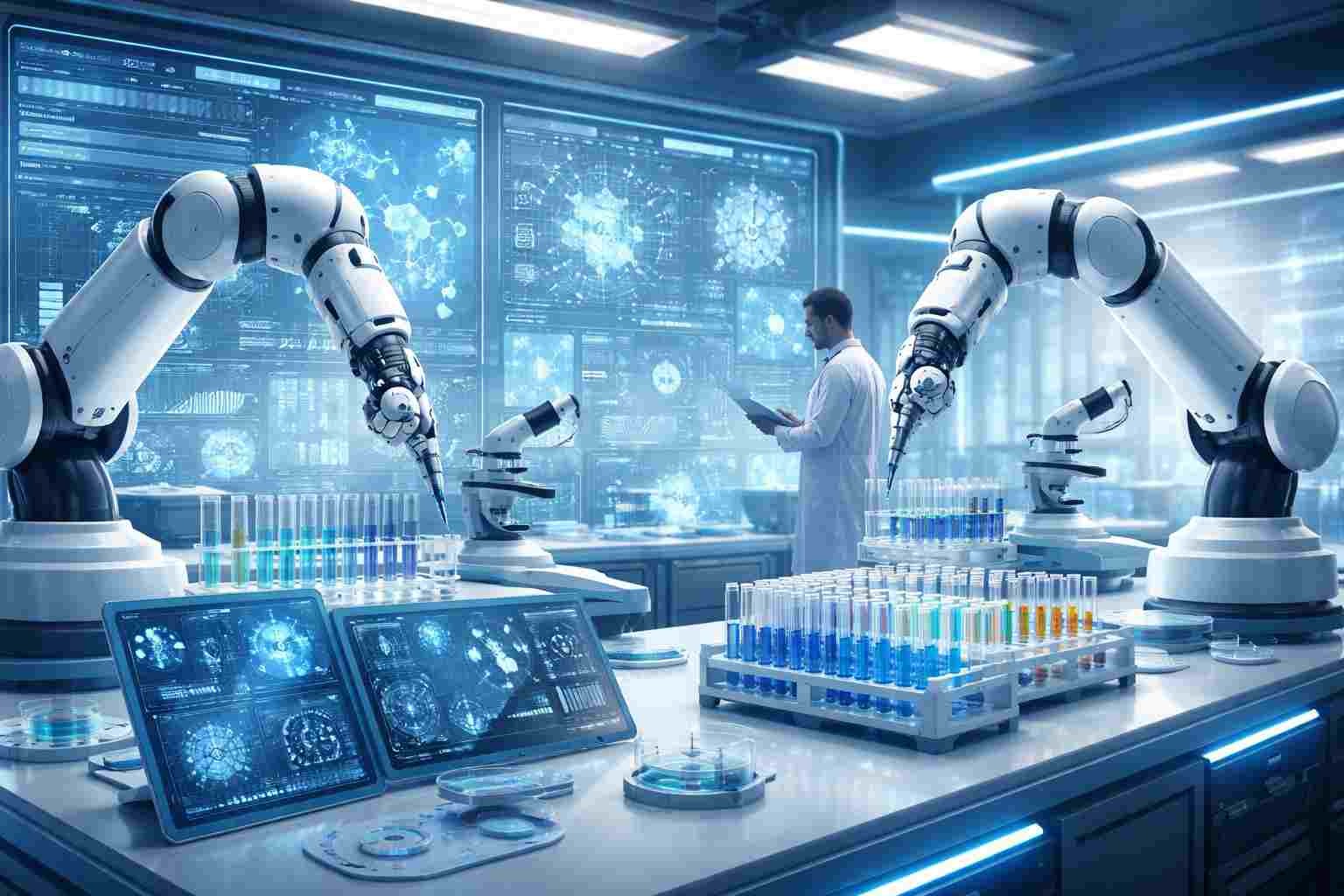
Robots Cutting Lab Errors
Robots Cutting Lab Errors is one of the most practical and impactful benefits of automation. Errors in laboratories can come from many sources: misplaced samples, incorrect pipetting, inaccurate timing, or simple human fatigue. These errors can delay research, compromise data, and increase costs. Robots, by contrast, are consistent. They follow instructions precisely, repeat tasks without variation, and track every step they take. This consistency is why many labs now rely on robotics for tasks that once caused bottlenecks. From clinical diagnostic labs to industrial research facilities, automated systems reduce the chance of mistakes and increase trust in results.
One famous example of robots cutting errors is in clinical labs where patient samples are tested for diseases. Manual handling of hundreds of tubes can lead to mislabeling or mix‑ups, which have serious consequences. Automated systems use barcode scanning and robotic arms to move and process samples. Each sample’s history is recorded from arrival to result, creating a digital trace that can be audited if needed. Studies comparing manual and automated workflows show that automation significantly reduces error rates and improves turnaround time. In environments where speed and accuracy are critical, such improvements have direct benefits for patient care and research outcomes.
In research labs, robotic systems help reduce errors in high‑throughput experiments. These experiments often involve running thousands of tests with slight variations. Manual work in such settings is prone to fatigue and inconsistency. Robots, however, perform each task exactly the same way every time, ensuring uniform conditions across all tests. This allows scientists to trust that differences in data reflect true experimental effects and not variations in how the work was done. Automated liquid handlers, for instance, can dispense tiny volumes of reagents with a precision that is difficult for humans to match, especially over long workdays.
Another way robots cut errors is through real time monitoring and feedback. Smart systems can detect when something is out of tolerance, such as a pipette tip clogs or a temperature deviates from the required range. Instead of continuing with a flawed process, the system alerts technicians or automatically adjusts the procedure. This proactive error management reduces waste and protects valuable samples. Instruments connected to centralized software also update protocols automatically, removing the problem of outdated instructions that can happen in manual settings. The result is a more controlled and reliable workflow.
The economic benefits of reducing errors are clear. Fewer mistakes mean fewer repeat experiments, lower reagent costs, and less time spent troubleshooting. Labs that once struggled with high discard rates find that automation improves efficiency and frees up staff to focus on interpretation and new ideas rather than correcting problems. Labs that adopt robotic systems also often report higher staff satisfaction because tedious work is taken off their plates. As research becomes more complex, the role of robots cutting lab errors will only grow more important.
New Tech in Labs
New Tech in Labs captures the latest innovations driving automation forward. Laboratories today are not just collections of machines; they are interconnected systems of instruments, software, data networks, and robots working together. Technologies such as cloud computing, machine learning, advanced sensors, and remote monitoring have become part of modern lab environments. This new tech enhances not only the speed of work, but also the quality and scalability of research. For example, cloud‑based laboratory platforms allow scientists to design and control experiments from anywhere, enabling remote research operations that were once impossible.
One example of new tech in labs is the use of advanced imaging systems that automatically capture and analyze results from cell cultures or biochemical assays. Combined with AI algorithms, these imaging tools can classify results, detect patterns, and highlight anomalies faster than human review. This accelerates discovery in fields like cancer research where image‑based data is critical. Another innovation is the use of predictive maintenance for lab instruments. Sensors embedded in machines monitor performance and alert staff before breakdowns occur. This reduces downtime and extends the life of expensive equipment.
Data integration platforms are also transformative. In traditional labs, data often lives on individual machines or in separate spreadsheets. New tech in labs includes systems that automatically aggregate data from different sources, standardize formats, and present insights in dashboards. This gives researchers real‑time visibility into experiment progress and outcomes. With the rise of big data in science, having centralized data systems is essential for collaboration and analysis. These platforms also support compliance with regulatory requirements by keeping detailed records and audit trails.
Another important tech trend is modular automation. Instead of purchasing large single‑purpose systems, labs can now build automation workflows step by step using modular units. These units communicate through standards and can be reconfigured for different tasks. This flexibility accelerates adoption because labs can start small and expand over time. Autonomous mobile robots that navigate the lab floor are also becoming common. These robots transport samples, deliver reagents, and move waste, reducing the need for human movement and improving safety.
As labs adopt these technologies, the skill sets required from staff also evolve. Researchers must understand how to operate digital tools, interpret data dashboards, and collaborate with automated systems. Universities and training programs are adjusting curriculums to prepare the next generation of scientists for this new environment. In this way, new tech in labs is changing not only how science is done but who does it and what skills they need.
Lab Automation Industry Insights
Lab Automation Industry Insights reflect broad changes in the scientific ecosystem. Industry growth is strong, driven by demand for faster discovery, cost efficiencies, and greater data reliability. Market analysts predict that the global lab automation news sector will continue expanding as more organizations adopt robotics, smart software, and integrated platforms. Major equipment companies and software providers are investing heavily in automation solutions, and startups are attracting venture capital at record levels. These insights show that lab automation news is not a niche trend, but a core direction for science and research worldwide.
One major industry insight is the shift toward fully integrated laboratory environments. Instead of isolated machines, labs are becoming ecosystems where hardware and software work seamlessly together. This integration improves efficiency and enables complex workflows that were once difficult to manage manually. Another insight is that automation is no longer limited to big pharma or high‑budget research facilities. Smaller labs, academic institutions, and even field labs now have access to affordable automation tools that scale with their needs.
Regulatory environments also influence automation adoption. Agencies that oversee clinical trials and diagnostic labs increasingly require detailed documentation and traceability. Automated systems provide the audit trails regulators need, improving compliance and reducing the risk of errors that can delay approvals. This compliance benefit is especially important in biotech and healthcare sectors, where patient safety and data integrity are critical.
Workforce trends are another important insight. As automation takes over routine tasks, human roles shift toward analysis, design, and problem solving. Lab staff need new skills, such as programming robotics systems, interpreting large datasets, and integrating digital tools. Organizations that invest in training and change management see better outcomes from their automation initiatives. Researchers increasingly collaborate with engineers, software specialists, and data scientists, forming multidisciplinary teams that drive innovation.
Finally, the pace of innovation in lab automation news continues accelerating. New products and platforms are introduced each year, pushing boundaries and creating new opportunities. Labs that adopt automation early gain competitive advantages, from faster research cycles to improved data quality. Industry insights show that the future of lab work will be defined by intelligent systems, connected environments, and human‑machine collaboration that unlocks new possibilities in science.
Future of Robotic Labs
The Future of Robotic Labs is not just about machines replacing humans. It is about labs becoming smarter, faster, and fully connected. In 2026, robotic systems are no longer limited to simple tasks like moving samples or loading plates. They are now integrated with AI, data systems, and advanced sensors to run whole experiments with minimal human help. This transforms the way scientists work, how discoveries happen, and how errors are reduced in research. Imagine a lab where a robot can learn from past experiments, fix small problems on its own, and repeat complex tasks every day without fatigue. This is the real future that industry leaders and researchers see coming.
In this new world, robots will not only do physical work but also help think scientifically. They will study results, suggest better ways to run tests, and even predict outcomes before an experiment starts. This is possible because robotics are now linked with machine learning and big data analytics. When a robot performs a task repeatedly, it collects information. That information is stored, analyzed, and used to make the next run more accurate. Over time, this leads to huge improvements in speed and precision. Labs that once took weeks to complete research may finish similar work in days or hours. These innovations are especially important in fields like medicine, environmental science, and material development where timing matters a lot.
The real shift in the future of robotic labs comes from connected systems. Modern labs are building networks where every instrument, robot, and computer talks to one another. This means that a robot can fetch data from one machine, feed it into another system, and adjust future steps without manual input. In a sense, the lab works like a team, with robots and software communicating like human researchers do. This reduces downtime, eliminates redundant steps, and increases trust in results. In pharmaceutical labs, this can speed up drug discovery and improve safety. In academic research, students can focus on creativity rather than repetitive lab work.
To better understand how these systems evolve, it helps to look at real case studies. A leading global research facility recently introduced a robotic workflow connected to AI software. The system ran thousands of chemical reactions in a few days, compared to weeks of manual work. Every result was logged in a central database. Scientists could review trends, spot errors early, and modify tests immediately. This not only cut research time but also improved the quality of findings. Another biotech firm used robots for delicate cell handling, which was once prone to human mistakes. Their error rates dropped dramatically, and they could produce more consistent results week after week.
The table below shows some of the key changes expected in the future of robotic labs:
| Area of Change | Traditional Labs | Future Robotic Labs |
| Experiment Speed | Slow, manual | Fast, automated |
| Error Rate | High human errors | Low robotic errors |
| Data Tracking | Manual records | Digital, real‑time |
| Integration | Separate systems | Fully connected |
| AI Contribution | None | Learning & prediction |
Overall, the future of robotic labs will make science smarter and more efficient. Laboratories will become places where human talent is paired with machine precision. Robots will take on the workload that slows people down. People will spend more time thinking, solving problems, and creating new discoveries. This shift is already happening, and it will continue to grow every year.
Conclusion
The world of laboratory automation is entering a new era where machines do more than move samples. Robots will think, predict, and connect with other tools. This means faster research, fewer mistakes, and smarter labs overall. The shift toward robotic, AI‑integrated systems will transform how research centers and companies work. As innovation increases, laboratories will become safer, more productive, and more reliable. The future of science is tied to lab automation news, and the journey has only just begun.
FAQs
What is a robotic lab?
A robotic lab is a scientific workspace where robots and machines perform tasks that humans once did manually. These tasks include moving samples, running experiments, and collecting data.
How does robotics reduce errors in labs?
Robots follow instructions with precision. They do the same task the same way every time. This reduces mistakes that often happen when humans are tired or distracted.
Are robotic labs expensive?
Robotic labs have high initial costs. However, over time they save money by speeding up work, reducing errors, and lowering operational costs. Many organizations find them a good long‑term investment.
Will humans still work in robotic labs?
Yes. Humans will focus on planning, designing experiments, and interpreting results. Robots will handle routine, repetitive tasks.
How soon will robotic labs become common?
Robotic labs are already in use today. As technology improves and costs fall, they will become even more common in research centers, hospitals, and universities.
