

In today’s fast-changing business world, companies cannot afford to depend on a single technology, platform, or solution forever. Markets evolve, customer expectations shift, and new innovations appear every day. This is where understanding Business Agnostic Meaning becomes important for modern organizations. A business agnostic approach helps companies stay flexible by focusing on goals and results instead of being locked into one specific option.
Whether it is technology selection, software solutions, vendors, or business strategies, flexibility has become a key factor for long-term success. Companies that adopt an agnostic mindset can adapt faster, reduce risks, control costs, and discover better opportunities.
In this complete guide, you will learn what business agnostic means, how this approach works, different types of agnostic strategies, real-world examples, and why it can shape the future of business growth. Let’s explore how flexibility can become a powerful competitive advantage.
What Does Agnostic Mean in Business?
In business, agnostic means having a flexible approach that does not depend on one specific technology, vendor, platform, product, or method. The term “business agnostic” describes a mindset where companies focus on achieving goals rather than limiting themselves to a single solution. This allows organizations to adapt quickly, explore better options, and make decisions based on performance, value, and long-term outcomes.
The Business Agnostic Meaning becomes clearer when we look at how modern companies operate. Instead of building their entire system around one supplier or technology, an agnostic business strategy keeps multiple possibilities open. For example, a company using a cloud-based system may avoid depending only on one cloud provider. It designs processes that can work across different platforms if business needs change.
Agnostic thinking is becoming increasingly important because markets, customer expectations, and technologies change faster than ever. Businesses that rely heavily on one solution may struggle when prices increase, services become outdated, or better alternatives appear. An agnostic approach reduces these risks by creating flexibility from the beginning.
For instance, a digital business may choose software tools that can integrate with different applications instead of selecting a platform that creates dependency. Similarly, a company may create marketing strategies that work across multiple channels rather than relying only on one advertising platform.
A business agnostic mindset does not mean ignoring brands, technologies, or specialized solutions. Instead, it means evaluating options objectively and selecting what delivers the best results. Companies still choose specific partners or tools, but they avoid unnecessary restrictions.
In simple terms, business agnostic means being open, adaptable, and focused on business objectives rather than being controlled by a single solution provider. This approach helps organizations remain competitive, innovative, and prepared for future changes.
How Agnostic Approach Works in Modern Companies
A modern agnostic business approach works by separating business goals from specific solutions. Instead of asking, “Which tool should we use?” companies first ask, “What problem are we trying to solve?” This shift allows businesses to evaluate different technologies, suppliers, and strategies based on their actual requirements.
The Business Agnostic Meaning in practice is about creating systems and processes that can adapt over time. Companies using this approach usually build flexible operations, where changing one technology or service provider does not completely disrupt their workflow.
For example, a company developing an online platform may create its software architecture in a way that supports multiple databases, payment providers, or cloud environments. If one provider no longer meets expectations, the company can switch without rebuilding everything from zero.
Agnostic companies usually follow a few important principles:
1. Focus on Business Objectives First
The first step is understanding the desired outcome. Companies define goals such as improving customer experience, reducing costs, increasing efficiency, or expanding operations before choosing any solution.
This prevents businesses from becoming dependent on a trendy technology that does not actually solve their problems.
2. Build Flexible Systems
Modern organizations create flexible processes that support integration and future changes. This includes using open standards, APIs, scalable software, and adaptable workflows.
For example, a business may use customer relationship management software that can connect with different marketing and sales tools.
3. Evaluate Multiple Options
An agnostic approach encourages companies to compare different solutions instead of automatically choosing the most popular provider. Factors like cost, scalability, security, and performance become more important than brand recognition alone.
4. Prepare for Future Changes
Markets evolve quickly. A business that follows an agnostic strategy can adjust faster because its foundation is not restricted to one option.
Companies in industries like finance, healthcare, SaaS, and e-commerce increasingly use this approach because flexibility has become a competitive advantage.
A practical example is a retail company using multiple payment gateways instead of depending on only one payment processor. If one service experiences downtime or increases fees, customers can continue transactions through alternative options.
Ultimately, an agnostic approach helps businesses create stronger, more resilient operations that can survive technological changes and market uncertainty.
Types of Agnostic Business Strategies Explained
Businesses can apply agnostic thinking in different areas depending on their goals and operational needs. The main idea behind all these strategies remains the same: avoid unnecessary dependency and maintain flexibility.
Understanding different types of agnostic strategies helps explain the broader Business Agnostic Meaning and how companies use it to improve decision-making.
1. Technology Agnostic Strategy
A technology agnostic strategy means a company does not build its operations around one specific technology. Instead, it chooses solutions based on functionality, compatibility, and business value.
For example, a company may design applications that can run on multiple operating systems or cloud environments. This reduces risks and allows easier technology upgrades.
2. Vendor Agnostic Strategy
Vendor agnostic businesses avoid depending completely on one supplier. They compare different vendors and maintain the ability to change providers when necessary.
For example, a company purchasing business software may prefer solutions that allow data migration instead of locking all information into one platform.
3. Platform Agnostic Strategy
A platform agnostic approach focuses on creating products or services that work across multiple platforms.
A mobile application available on different operating systems is a simple example. The company reaches more users without being limited to one ecosystem.
4. Industry Agnostic Strategy
Some businesses create solutions that can serve customers across multiple industries instead of targeting only one sector.
For example, a project management tool may be useful for software companies, marketing agencies, educational organizations, and consulting firms.
5. Data Agnostic Strategy
Data agnostic companies focus on using information effectively regardless of where it comes from. They build systems that can collect, process, and analyze data from multiple sources.
This approach is especially valuable in artificial intelligence, analytics, and enterprise technology.
| Agnostic Strategy | Main Focus | Business Advantage |
| Technology Agnostic | Flexible technology choices | Easier upgrades and innovation |
| Vendor Agnostic | Multiple suppliers | Lower dependency risk |
| Platform Agnostic | Multiple platforms | Wider customer reach |
| Industry Agnostic | Multiple markets | More growth opportunities |
| Data Agnostic | Flexible data usage | Better decision-making |
Choosing the right agnostic strategy depends on business size, industry requirements, and future objectives. However, every approach shares one goal: creating flexibility while maintaining strong business performance.

Technology Agnostic vs Vendor Agnostic Approach
Although technology agnostic and vendor agnostic approaches are closely related, they solve different business challenges. Many companies confuse these concepts, but understanding the difference is important when creating a flexible business strategy.
A technology agnostic approach focuses on avoiding dependence on a specific technology. A vendor agnostic approach focuses on avoiding dependence on a specific supplier or service provider.
The Business Agnostic Meaning includes both approaches because they help organizations maintain freedom of choice.
| Feature | Technology Agnostic | Vendor Agnostic |
| Main Focus | Technology compatibility | Supplier flexibility |
| Avoids Dependency On | Specific technology or framework | One company or provider |
| Primary Goal | Adapt to technology changes | Maintain negotiation power |
| Common Example | Software working across platforms | Using multiple service providers |
Technology Agnostic Approach
A technology agnostic company designs systems that can operate with different technologies. This approach is useful because technology changes rapidly.
For example, a business may avoid creating software that works only with one programming language or database system. Instead, it builds a flexible architecture that supports future upgrades.
Benefits include easier innovation, reduced migration problems, and longer technology lifespan.
Vendor Agnostic Approach
A vendor agnostic strategy focuses on supplier independence. Companies avoid becoming permanently tied to one provider.
For example, a business using accounting software may choose a solution that allows easy data export. If another provider offers better pricing or features, switching becomes easier.
Vendor flexibility also improves negotiation power because companies are not forced to accept every condition from one supplier.
Also Read: Uvlack Full Guide To Meaning Uses And Applications
Which Approach Is Better?
Neither approach is universally better. The right choice depends on business goals.
A startup may prioritize technology flexibility because it expects rapid growth and changing requirements. A large enterprise may focus more on vendor independence because supplier relationships involve significant costs.
Many successful organizations combine both strategies. They select reliable technologies and vendors while ensuring their systems remain adaptable.
Key Benefits of an Agnostic Business Model
An agnostic business model provides companies with the flexibility needed to compete in rapidly changing markets. Instead of building operations around one fixed solution, businesses create adaptable systems that support growth, innovation, and long-term stability.
The Business Agnostic Meaning is strongly connected with independence, flexibility, and strategic decision-making. Companies following this model can respond faster when customer demands, technologies, or market conditions change.
1. Greater Flexibility
The biggest advantage of an agnostic model is flexibility. Businesses can evaluate new opportunities without being restricted by existing systems.
For example, a company can adopt a better software solution without completely replacing its entire infrastructure.
2. Reduced Business Risk
Dependency creates risk. If a company relies on one provider, platform, or technology, unexpected changes can create serious problems.
An agnostic model reduces this risk by keeping alternative options available.
3. Improved Innovation
Flexible businesses can experiment with new tools and strategies more easily. They are not limited by outdated systems or long-term commitments.
This encourages continuous improvement and faster innovation.
4. Better Cost Management
Agnostic companies can compare different solutions and select options that provide the best value.
Instead of accepting increasing costs from one provider, they can explore competitive alternatives.
5. Stronger Long-Term Growth
Markets constantly evolve. Businesses that maintain flexibility are better prepared for future challenges.
A company built with an agnostic mindset can expand into new markets, adopt emerging technologies, and adjust strategies without major disruption.
| Benefit | How It Helps Businesses |
| Flexibility | Supports faster adaptation |
| Lower Risk | Reduces dependency problems |
| Innovation | Encourages experimentation |
| Cost Control | Enables better choices |
| Scalability | Supports future expansion |
Agnostic business models are especially valuable for technology companies, SaaS providers, startups, and enterprises operating in competitive environments.
By focusing on goals instead of limitations, businesses create stronger foundations for sustainable success. The ability to adapt is no longer just an advantage; it has become a critical requirement for modern organizations.
Check this one: Agnostic Meaning in Business – Why It Matters?
Real-World Examples of Agnostic Businesses
Many successful companies apply agnostic principles to remain flexible, reduce dependency, and adapt to changing market conditions. These businesses focus on solving customer problems rather than limiting themselves to one technology, platform, or supplier.
A common example is cloud-based companies that design applications to work across multiple cloud environments. Instead of depending on a single infrastructure provider, they build flexible systems that allow easier migration and scalability.
In the software industry, many SaaS companies follow a platform-agnostic approach by creating tools that integrate with different applications. For example, a project management platform may connect with various communication, payment, and productivity tools to serve different customer needs.
Retail businesses also use vendor-agnostic strategies by working with multiple payment providers, logistics partners, and marketplaces. This reduces operational risks and improves customer experience.
The Business Agnostic Meaning becomes practical through these examples because companies prioritize adaptability, customer value, and long-term growth over dependence on one solution. This flexible mindset helps organizations stay competitive in unpredictable markets.
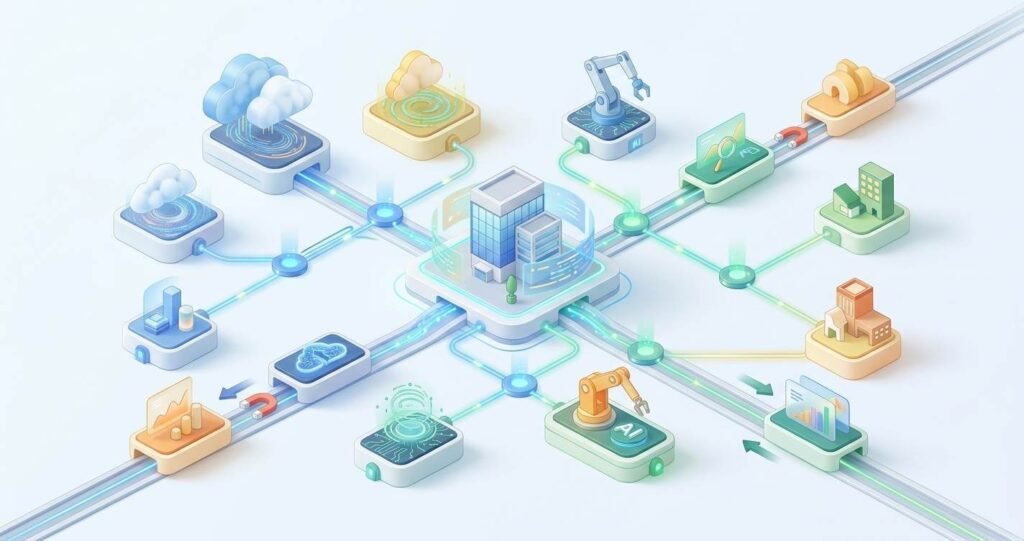
Future Impact of Agnostic Strategies on Business Growth
The future of business will increasingly depend on flexibility, and agnostic strategies will play a major role in helping companies grow sustainably. As technology evolves rapidly, businesses that depend on a single platform, provider, or system may face limitations when new opportunities appear.
Agnostic strategies allow organizations to adopt emerging technologies, change partners, and expand into new markets without major disruptions. Companies using flexible architectures will be better prepared for advancements in artificial intelligence, automation, cloud computing, and digital transformation.
The Business Agnostic Meaning reflects a future-focused approach where adaptability becomes a competitive advantage. Businesses will prioritize interoperability, open systems, and scalable solutions to maintain efficiency.
Startups and large enterprises alike will benefit from this approach because it supports faster innovation and reduces operational risks. In the coming years, companies that embrace agnostic strategies will have greater freedom to experiment, improve customer experiences, and respond quickly to market changes.
