
For decades, businesses designed supply chains around national markets.
A warehouse served local customers.
Inventory was purchased based on domestic demand.
Distribution networks were optimised within country borders.
That model made sense when businesses operated primarily in one market.
Today, it is becoming increasingly outdated.
Across Southeast Asia, commerce is becoming far more interconnected. Customers purchase products from international brands with ease, businesses expand into neighbouring countries much earlier in their growth journey, and marketplaces have lowered many of the traditional barriers to cross-border selling.
For Malaysian businesses, this creates an important strategic opportunity.
Instead of thinking about supply chains solely through the lens of the domestic market, organisations can begin designing operations that support the entire ASEAN region.
The challenge, however, is that regional growth introduces far more complexity than geographical expansion alone.
Serving more countries does not simply mean shipping products further.
It requires businesses to rethink how inventory is positioned, how warehouses operate, how customer orders are coordinated, and how operational decisions are made across multiple markets simultaneously.
The companies that prepare for this shift today will be significantly better positioned as regional commerce continues accelerating.
Growth Across ASEAN Is Changing Operational Priorities
Malaysia’s strategic location has always made it an attractive logistics hub.
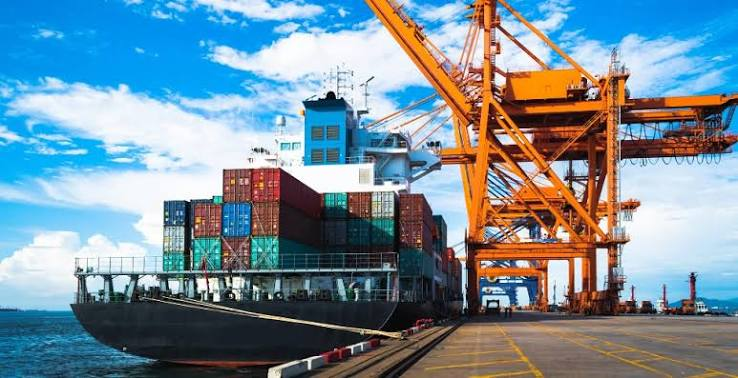
Its ports connect major international trade routes.
Its transport infrastructure supports efficient domestic distribution.
Its proximity to neighbouring economies makes regional fulfilment increasingly practical.
As more businesses expand across ASEAN, these advantages become even more valuable.
However, regional growth changes operational priorities.
Businesses no longer optimise purely for domestic delivery performance.
Instead, they begin balancing multiple objectives.
Serving customers across different countries.
Managing varying transportation lead times.
Supporting multiple currencies and marketplaces.
Responding to different demand patterns.
Maintaining inventory availability despite constantly changing regional requirements.
Success therefore depends less on local optimisation and more on regional coordination.
Why Regional Warehouses Need Regional Thinking
Many organisations still operate warehouses using processes designed for domestic distribution.
Inventory allocation remains country-specific.
Replenishment follows fixed schedules.
Warehouse capacity is planned around historical demand.
Regional operations require a different mindset.
Inventory may need to move between countries more frequently.
Products can experience strong demand in one market while slowing in another.
Warehouse resources must adapt to changing regional priorities instead of static domestic forecasts.
This requires businesses to think of warehouses as flexible regional assets rather than isolated facilities.
Warehouse strategy becomes directly connected to broader commercial expansion.
Operational Complexity Grows Faster Than Revenue
One of the most underestimated aspects of regional expansion is operational complexity.
Adding another market does not simply add more customers.
It multiplies operational relationships.
More suppliers.
More transportation routes.
More customer expectations.
More inventory decisions.
More fulfilment scenarios.
Without integrated operational planning, complexity often increases much faster than revenue.
This creates unnecessary costs, inconsistent customer experiences, and reduced organisational agility.
Businesses therefore need operational systems capable of simplifying complexity rather than merely managing it.
Why Warehouses Must Become More Adaptive
Traditional warehouse performance focused heavily on productivity.
Orders processed.
Picks completed.
Storage utilisation.
These metrics remain valuable, but they no longer tell the complete story.
Regional fulfilment requires warehouses that can adapt continuously.
Inventory priorities change daily.
Customer demand shifts across markets.
Inbound shipments fluctuate.
Warehouse workloads become increasingly dynamic.
Modern Warehouse Management in Malaysia solutions support this adaptability by providing real-time visibility into warehouse operations while improving receiving, storage, replenishment, inventory movement, picking, and shipping processes. Rather than treating warehouse activities as isolated tasks, businesses gain connected operational workflows that respond more effectively as regional fulfilment requirements evolve.
The warehouse becomes an active participant in regional business strategy instead of simply executing operational instructions.
The Missing Link in Regional Expansion
Many businesses invest heavily in warehouse operations while overlooking another equally important capability.
Order orchestration.
As organisations expand across ASEAN, customer orders originate from multiple sources.
Regional ecommerce platforms.
Brand websites.
Wholesale customers.
Retail partners.
Social commerce.
Each order competes for available inventory.
Each market has different fulfilment expectations.
Each warehouse has different capacity constraints.
Without coordinated decision-making, businesses often experience unnecessary inventory transfers, fulfilment delays, or inconsistent customer experiences.
The challenge is not processing more orders.
It is making better decisions before warehouse execution begins.
Why OMS Has Become a Regional Growth Platform
Regional commerce demands much more than order processing.
Businesses need systems capable of determining the most efficient fulfilment strategy for every customer order.
Inventory allocation.
Warehouse selection.
Shipment consolidation.
Customer prioritisation.
Cross-channel coordination.
These decisions increasingly define operational performance.
Modern OMS Malaysia platforms provide this coordination by creating a unified operational view across sales channels, inventory locations, and fulfilment resources. Instead of allowing each channel or warehouse to operate independently, businesses can intelligently orchestrate customer orders throughout the fulfilment lifecycle, improving consistency while reducing manual intervention.
Order management therefore becomes a strategic capability that supports regional scalability rather than simply recording customer transactions.
Building Supply Chains That Can Grow With ASEAN
The next decade will likely see even greater integration across Southeast Asia.
Businesses that continue operating separate country-by-country supply chains may struggle with rising operational costs and fragmented inventory networks.
Those that build regional operating models today will gain significant long-term advantages.
Shared inventory visibility.
Flexible warehouse operations.
Connected fulfilment planning.
Integrated order orchestration.
These capabilities enable organisations to expand into new ASEAN markets without rebuilding operational processes each time growth occurs.
Instead, the supply chain becomes a scalable platform for regional commerce.
Conclusion
Malaysia is uniquely positioned to become one of ASEAN’s most important operational hubs.
Its geographic advantages provide an excellent foundation, but geography alone will not determine future success.
The businesses that thrive will be those capable of coordinating inventory, warehouses, and customer orders across an increasingly connected regional marketplace.
By strengthening warehouse execution through Warehouse Management in Malaysia and creating intelligent fulfilment orchestration with OMS Malaysia, organisations can build supply chains designed not only for today’s domestic market but also for tomorrow’s regional opportunities.
As ASEAN commerce becomes more integrated, competitive advantage will belong to businesses that stop thinking in national supply chains and start building regional ones.
